Orchids 101

September: Reading the First Signs of Fall

September has arrived, and here in California’s Central Valley, the change of season is beginning to make itself known.

The afternoons can still be warm, but the nights are beginning to cool. The difference between day and night becomes more noticeable, and our orchids begin responding to changes in temperature, light, and the length of the day.

Last month, we focused on Preparing for the Next Season—learning to notice the subtle changes that begin before autumn actually arrives.

Now those changes are becoming easier to see.

Fall doesn’t arrive all at once. Our orchids tell us it is coming.

🌿 The Turning of the Season

One of the most useful things we can learn as orchid growers is that change is rarely a single event.

A plant doesn’t suddenly change its entire pattern of growth because the calendar says September. Instead, small changes accumulate. Nights become cooler. Days become shorter. Growth matures. Flower spikes appear. Some orchids begin preparing to bloom, while others begin preparing for rest.

Our job is not to make every orchid respond in the same way.

Our job is to notice what each plant is doing and provide the conditions that allow it to continue doing it well.

September is a month of transition—not an instruction to change everything, but an invitation to pay closer attention.

🌡️ Watching the Weather

The first thing to watch this month is the nighttime temperature.

Here in the Central Valley, September can bring warm afternoons alongside significantly cooler nights. That day-to-night difference can be an important seasonal signal for many orchids.

But cooler nights do not mean that every orchid should receive the same treatment.

Cymbidiums appreciate the cooler temperatures of fall and may begin moving toward their flowering season.

Cattleyas may still be actively growing, maturing pseudobulbs, or developing flower spikes. If a Cattleya is growing well, continue supporting that growth rather than making unnecessary changes.

Phalaenopsis may respond to cooler nights by beginning flower spike initiation, particularly when mature plants experience several weeks of cooler nighttime temperatures while days remain warm.

Paphiopedilums generally prefer a steadier environment and should continue to receive the consistent moisture they need.

Oncidium alliance orchids may still be actively growing or flowering, so continue following the plant’s growth cycle rather than the calendar.

Dendrobiums remind us especially well that every orchid has its own rhythm. Warm-growing types may continue active growth, while many nobile-type Dendrobiums are beginning their transition toward autumn and winter rest.

The lesson is simple:

A change in the season does not necessarily mean every orchid needs a change in care. Watch first. Adjust second.

🌸 When You Find a Flower Spike

One of the most exciting things to discover in September is a developing flower spike.

If you find one, there is no need to suddenly change everything about the way you grow the plant. In fact, the best thing you can often do is to give the developing flower a little more space and a little more attention.

As the spike grows:

1. Give the plant a little more space.

Move neighboring orchids farther away so that leaves, spikes, and developing buds aren’t touching.

This does more than prevent accidental damage. More space improves air circulation and allows light to reach the developing inflorescence.

2. Preserve good light.

Keep the plant in an environment where it has been growing successfully, while making sure developing buds aren’t exposed to excessive heat or harsh afternoon sun.

3. Place support early.

If the spike will need staking, put the support in place while the spike is still young and flexible.

A young spike can be guided gently. Waiting until it becomes stiff and mature can make positioning much more difficult and increases the possibility of damage.

4. Minimize disturbance.

Once a spike is developing well, resist the temptation to continually move or rotate the plant.

Give it a stable place where the developing flowers can mature undisturbed.

5. Continue appropriate watering and feeding.

A developing flower spike is part of the plant’s normal growth cycle. Continue providing the moisture and nutrition appropriate for that orchid and its growing environment.

There is usually no need to try to force the plant into producing larger flowers by dramatically changing its feeding routine.

6. Watch the developing buds.

Inspect the spike and buds regularly for pests, physical damage, or anything that might interfere with their development.

A little attention early can prevent a much bigger problem later.

7. Avoid unnecessary repotting.

If the plant is healthy and growing well, this is generally not the time to disturb its roots simply because it may be approaching flowering.

8. Keep the plant clean and well presented.

Remove genuinely dead or damaged material and keep the pot and surrounding area tidy, while allowing the healthy plant to remain natural.

Once an orchid begins preparing to flower, our role changes slightly.

We aren’t trying to make the flower happen. The plant is already doing that.

Our job is to notice what it needs and provide the space, light, stability, and care that allow it to finish what it has begun.

🌺 Every Orchid Has Its Own Rhythm

September is a good month to look across your collection and notice how differently your orchids are responding.

One may be producing a flower spike.

Another may be finishing a pseudobulb.

Another may be developing new roots.

Another may be preparing for a period of rest.

These aren’t competing schedules. They are different expressions of the same seasonal transition.

Learning to recognize these differences is one of the most rewarding parts of becoming an experienced orchid grower.

Rather than asking, “What should I be doing to my orchids in September?”

try asking:

“What is each of my orchids doing right now?”

The answer will often tell you what comes next.

🧹 Preparing for the Change Indoors

As nighttime temperatures continue to fall, some orchids will eventually need to move into more protected conditions.

September is a good time to begin preparing—not necessarily by moving everything indoors immediately, but by making sure plants are ready when the time comes.

Before bringing an orchid inside, inspect it carefully.

Look underneath leaves, around pseudobulbs, along flower spikes, and around the pot.

Watch for:

  • scale
  • mealybugs
  • spider mites
  • snails and slugs
  • damaged or rotting roots
  • fungal or bacterial spotting
  • dead leaves and old growth

Also take a look at your growing area.

Clean benches and shelves. Check fans and air circulation. Make sure windows and screens are functioning properly. Organize stakes, clips, labels, and other supplies.

A little preparation now makes the seasonal transition much easier later.

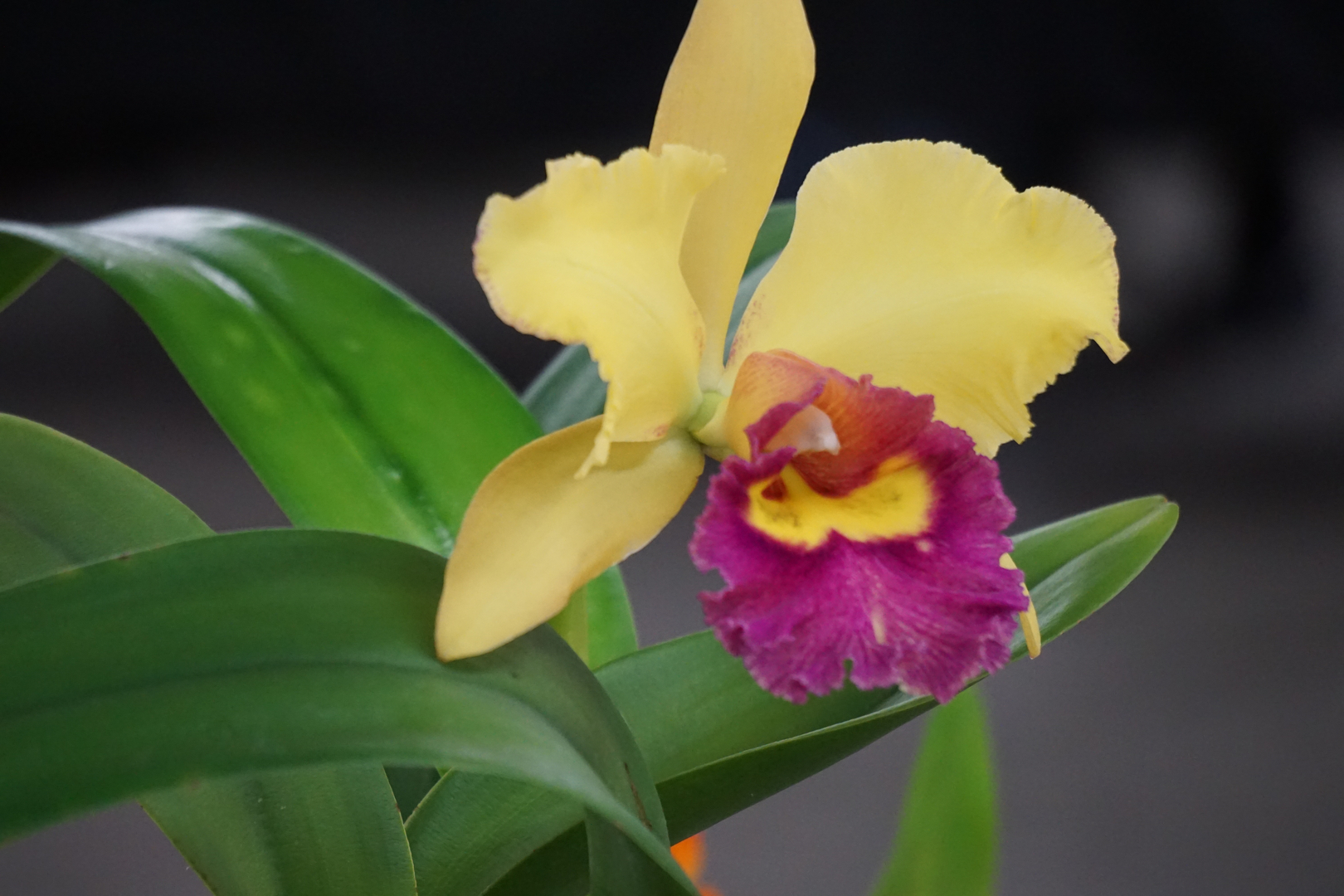
🌸 Orchid Spotlight: Cattleya

Cattleyas are particularly interesting to watch in September.

Depending on the plant and its growing cycle, you may see mature pseudobulbs, sheaths, developing spikes, or even flowers beginning to open.

If your Cattleya has a developing spike, this is a wonderful time simply to observe its progress.

Is the spike elongating?

Are the buds developing evenly?

Does the plant have enough room around it?

Is the light appropriate?

Are the roots healthy?

Are there pests that need attention?

The answers to these questions are more useful than any calendar-based instruction.

And if your Cattleya happens to be developing toward an October bloom, you may have a particularly exciting few weeks ahead.

🎪 Looking Ahead to October

October brings the Fresno Fair and another opportunity for the Central California Orchid Society to share our love of orchids with the community.

Our society will once again be represented at the fairgrounds, and members will have the opportunity to enter orchids for judging.

If you have a plant that may be coming into bloom, September is a wonderful time to give it a little extra attention.

You don’t have to decide yet whether it will be a show plant.

Simply watch it.

Give it good light. Keep it healthy. Give the developing spike room to grow. Support it gently while it is still flexible. Protect the buds from pests and physical damage.

And see what happens.

Sometimes the plant we expect to bloom doesn’t quite make the timing. Another plant may surprise us. A flower may open earlier or later than expected.

That’s part of growing orchids.

The goal is not to force a plant to bloom for a particular date.

The goal is to cultivate healthy plants and be ready to appreciate the flowers when they arrive.

If one of those plants happens to be at its best when the October show arrives, we will have the pleasure of sharing it with everyone.

🌼 Orchid Reflections: The Season Turns

There is something remarkable about watching an orchid respond to a changing season.

The plant does not need to be told that summer is ending.

It simply responds.

A cooler night.

A shorter day.

A maturing pseudobulb.

A new root.

The beginning of a flower spike.

The signs may be small, but together they tell us that the plant is moving into another part of its cycle.

Good orchid growing is not about holding a plant in one state forever.

It is about recognizing change and working with it.

We make room for new growth.

We support a developing spike.

We adjust when the environment changes.

We allow one cycle to finish so that another can begin.

The seasons turn, and our orchids turn with them.

Perhaps that is one of the quiet lessons of growing orchids: we don’t have to make the cycle happen. We only have to learn how to participate in it.

📍 Central Valley Watch

As September progresses:

🌡️ Watch overnight temperatures as well as daytime highs. The difference between the two is becoming increasingly important.

🌙 Notice which orchids respond to the cooler nights and which continue growing as before.

💧 Check pots before watering. As temperatures change, drying times may change as well.

🌸 Look for developing flower spikes, sheaths, and buds.

🐛 Inspect developing flowers and spikes regularly for pests and physical damage.

🏠 Begin preparing plants and growing areas for the eventual transition indoors.

🎪 Keep an eye on orchids that may be approaching bloom for the October show.

🌿 This Month in the Greenhouse

Take a few minutes this month to:

✓ Record or simply observe your overnight temperatures.

✓ Notice which orchids are actively growing, flowering, maturing, or preparing to rest.

✓ Give developing flower spikes a little extra space.

✓ Move neighboring plants farther apart where necessary to improve airflow and light access.

✓ Place supports early, while developing spikes are still flexible.

✓ Check buds and spikes regularly for pests and physical damage.

✓ Adjust watering according to actual drying conditions.

✓ Inspect plants before bringing them indoors.

✓ If you have a potential October show plant, give it consistent, attentive care without making unnecessary changes.

✓ Most importantly, enjoy watching your orchids respond to the changing season.

💡 Tip of the Month

When an orchid begins to change, follow the plant rather than the calendar.

The more closely we observe, the more clearly our orchids tell us what they need.

September is the month to notice those signals—and to make room for what comes next.
August: Preparing for the Next Season

August often feels like the height of summer here in California’s Central Valley. The afternoons are hot, the sun is intense, and our orchids continue growing beneath long days and bright skies. At first glance, August can seem much like July.

But if we look a little closer, something remarkable is happening.

Nature has already begun to turn the page.

The days are becoming just a little shorter. Evening temperatures slowly begin to soften. Our orchids, finely tuned to their environment, are already responding to changes that many of us have yet to notice.

Last month, we focused on Strength Through Observation—learning to inspect our plants carefully, protect them from summer pests, provide thoughtful summer care, and make small adjustments before small problems became larger ones.

This month, our attention shifts from solving today’s challenges to recognizing tomorrow’s opportunities.


🌿 The Turning of the Season

One of the greatest lessons orchids teach us is that change is rarely sudden.

Nature doesn’t announce the arrival of autumn with a single cool evening. Instead, the transition unfolds gradually. Each day is a few minutes shorter than the last. Each week brings subtle changes in temperature and light.

Our orchids notice these changes long before we do.

Experienced growers learn to observe not just the plants themselves, but the environment surrounding them.

August is not the end of summer—it is the beginning of the next cycle.


🌡️ Watching the Weather

Many orchid growers have heard that cooler nights trigger blooming, especially in Phalaenopsis. But what does that actually mean?

Most mature Phalaenopsis begin initiating flower spikes after experiencing nighttime temperatures around 60–65°F (16–18°C) while daytime temperatures remain warm, generally 75–85°F. Just as importantly, those cooler nights usually need to persist for two to four weeks before the plant responds.

Here in California’s Central Valley, August is often still too warm for spike initiation. Overnight temperatures commonly remain in the upper 60s through much of the month. By late August—and more commonly during September—nighttime temperatures begin settling into the low to mid-60s.

That is when experienced growers begin checking carefully for the first signs of flower spikes.

The key is not to force the process, but simply to recognize when nature is quietly setting it in motion.


🌸 Why Won’t My Phalaenopsis Bloom?

One of the most common questions orchid growers ask is:

“My Phalaenopsis is healthy and grows beautiful leaves, but why won’t it bloom?”

Often, the answer isn’t fertilizer or watering—it’s temperature.

In nature, Phalaenopsis use the gradual cooling of late summer and early autumn nights as the signal to begin producing a flower spike. If a plant is kept indoors year-round in a home where the temperature remains a constant 72–75°F day and night, it may never receive the environmental cue that tells it the seasons are changing.

For many growers, the solution is surprisingly simple.

During late August and September, consider placing your Phalaenopsis:

  • Near a closed window, where it can experience naturally cooler nighttime temperatures.
  • Near an open window in the evening, provided temperatures remain comfortable and the plant is protected from strong drafts.
  • Outdoors in a shaded, protected location if nighttime temperatures consistently remain around 60–65°F, bringing the plant indoors if unusually cool weather is expected.

The goal isn’t to chill the plant. Instead, you’re allowing it to experience the gentle day-to-night temperature difference it would naturally encounter in its native habitat.

Be patient. Most Phalaenopsis need two to four weeks of these cooler nights before they begin producing a flower spike. Once the spike appears, you can return the plant to its usual growing location and enjoy watching the flowering season unfold.


🌺 Every Orchid Has Its Own Rhythm

One of the joys of growing a diverse collection is discovering that not every orchid follows the same calendar.

While one orchid prepares to bloom, another is storing energy. One may be producing new roots while another is quietly preparing for a period of rest.

Understanding these different rhythms helps us become better growers.

Phalaenopsis

As nights gradually cool, mature plants begin preparing for flower spike initiation. Continue providing bright, indirect light, regular watering, and consistent fertilizer while allowing nature to provide the seasonal signal.

Cattleya

August is an important month for Cattleyas. New pseudobulbs continue to mature, storing the water and energy that will support future blooms. Bright light, good air movement, and consistent feeding now often determine the quality of the flowering season later.

Paphiopedilum

Lady’s Slipper orchids continue steady vegetative growth through summer. Keep the potting mix evenly moist—not soggy, but never completely dry—and encourage healthy new fans, which will become future flowering growths.

Oncidium

Many Oncidiums continue active growth or flowering during late summer. They appreciate regular watering, good airflow, and careful observation as temperatures remain high.

Dendrobium

Dendrobiums remind us that there is no single “orchid schedule.” Warm-growing Phalaenopsis-type Dendrobiums continue active growth, while many nobile-type Dendrobiums begin the gradual journey toward their autumn and winter rest. Knowing which type you grow helps you provide the care that matches its natural rhythm.


🧹 Preparing Your Growing Space

August is also an excellent time to prepare your growing area for the months ahead.

Take a little time to:

  • Clean benches and growing shelves.
  • Remove dead leaves and spent flower spikes.
  • Check shade cloths for wear after months of intense sunlight.
  • Inspect fans and air circulation.
  • Organize pots, labels, and supplies before the busy fall growing season arrives.

These small tasks rarely seem urgent, but they create healthier growing conditions and make autumn orchid care much easier.

Preparation is often invisible, but its benefits become obvious later.


🌸 Orchid Spotlight: Phalaenopsis – Listening to the Seasons

Few orchids are as recognizable as the Phalaenopsis, or Moth Orchid. Their elegant arching sprays of flowers brighten homes for months, yet the decision to bloom begins long before we ever see a flower spike.

Unlike orchids that flower on a fixed schedule, Phalaenopsis pay close attention to their environment. As the days shorten and nighttime temperatures gradually cool, mature plants receive the signal that a new flowering season is approaching.

This is one of the quiet miracles of orchid growing. The plant isn’t responding to a calendar on the wall—it is responding to subtle changes in the world around it.

For growers, August becomes a season of anticipation. The flowers are still hidden, but the conditions that will produce them are already taking shape.


🌼 Orchid Reflections: Lessons from the Greenhouse

One of the quiet gifts of gardening is learning to recognize transitions.

Nature rarely changes all at once. Instead, it moves gradually. The days shorten by only a few minutes at a time. Evening temperatures soften almost imperceptibly. Plants begin preparing for the next season long before we notice the change.

Our orchids understand this instinctively.

One plant prepares to bloom.

Another stores energy.

A third begins slowing its growth.

Each responds according to its own rhythm, yet all are participating in the same turning of the seasons.

Perhaps there is wisdom in that.

We often imagine change arriving with great fanfare, but more often it begins quietly, almost unnoticed. A few cooler evenings. A subtle shift in the light. A new root. The earliest hint of a flower spike.

When we learn to recognize these gentle transitions, we begin to appreciate that every ending is also a beginning, and every season carries within it the promise of the next.

One of the greatest joys of growing orchids is that they teach us to anticipate rather than react. By paying attention to the quiet signals around us, we begin to move with nature instead of trying to stay one step ahead of it.


📍 Central Valley Watch

As August progresses:

🌡️ Begin watching overnight temperatures.

🌙 When nighttime lows begin holding between 60–65°F for several weeks, mature Phalaenopsis may begin initiating flower spikes.

👀 Check the center of your plants for the first tiny signs of new spikes—but don’t worry if they aren’t visible yet. For many Central Valley growers, September is when the first spikes begin to appear.


🌿 This Month in the Greenhouse

Take a few minutes this week to:

✓ Notice how the changing angle of the sun affects your growing area.

✓ Continue checking leaves and roots for healthy summer growth.

✓ Keep benches and growing areas clean and organized.

✓ Learn which orchids in your collection are growing, blooming, or preparing to rest.

✓ Spend a few quiet moments simply observing the subtle changes taking place around you.

Sometimes the most important changes are the ones that happen so gradually we almost miss them.


💡 Tip of the Month

Different orchids live by different calendars. Learning each plant’s natural rhythm is one of the most rewarding steps in becoming an experienced grower. The more closely we observe the seasons, the more our orchids teach us that every cycle has its purpose—and every season prepares the beauty of the next.


July: Strength Through Observation

Central California Orchid Society

As July settles over California’s Central Valley, our orchids enter one of the most demanding—and rewarding—times of the growing season. Long days, bright sunshine, and rising temperatures encourage active growth, but they also challenge us to become more attentive growers.

By now, much of the excitement of spring has passed. Repotting is behind us, new growth is well underway, and our role shifts once again. July is less about making major changes and more about observing carefully and responding thoughtfully.

Healthy orchid collections are rarely the result of dramatic interventions. More often, they are built through small, intentional actions taken before small concerns become large problems.


☀️ Summer Heat: Small Adjustments Make a Big Difference

Summer heat alone is not necessarily harmful. Many orchids thrive in warm conditions when they have good air movement, appropriate watering, and protection from intense afternoon sun.

Problems often develop when several stresses occur at once:

  • High temperatures combined with direct afternoon sunlight
  • Potting media drying more quickly than expected
  • Stagnant air around plants
  • Heat-stressed orchids becoming more vulnerable to pests and disease

Sometimes the smallest adjustment can make the biggest difference.

Recently, I left a beautiful new orchid in direct afternoon sun longer than I intended. By the time I noticed, several leaves had developed sunburn. It was disappointing, especially because it happened so quickly.

If something similar has happened to you, you’re in good company. Even experienced growers occasionally underestimate the intensity of a Central Valley summer afternoon. The important lesson isn’t to avoid every mistake—it’s to notice early, make adjustments, and continue learning. Damaged leaves won’t recover, but the orchid itself often will when given the proper care.

Observation is one of the greatest skills an orchid grower can develop.


🌤️ Shading for Summer Success

The sunlight that encouraged growth in May and June can become too intense by July.

As the angle of the sun changes and temperatures climb, orchids may benefit from additional shade during the hottest part of the day. A shade cloth, sheer curtain, or simply moving a plant a few feet can prevent unnecessary stress.

Watch your orchids for signs they are asking for help:

  • Yellowing or bleached leaves
  • Dry, scorched patches
  • Leaves that feel unusually warm during the afternoon

Making gradual adjustments is always preferable to sudden changes. Just as our eyes need time to adjust to bright sunlight, orchids benefit from a gentle transition.


🐛 Summer Visitors: Pests and Diseases

Warm weather doesn’t just encourage plant growth—it also creates favorable conditions for insects and disease.

Common summer pests include:

  • Spider mites
  • Mealybugs
  • Scale insects
  • Aphids on tender new growth

Early signs are often subtle:

  • Tiny speckling or stippling on leaves
  • Cotton-like white masses
  • Small brown bumps along leaves or stems
  • Sticky residue (honeydew)
  • Distorted or damaged new growth

Rather than reaching immediately for a treatment, begin by observing carefully. Correct identification allows for the most effective and least disruptive solution.

Healthy orchids are naturally more resilient, and early detection often means a simple correction rather than a major intervention.


🌱 Prevention Begins Before Problems

One of the most effective ways to protect an orchid collection is by preventing problems before they spread.

Whenever you bring home a new orchid, consider giving it a brief period of quarantine before placing it alongside the rest of your collection.

During that time:

  • Inspect the undersides of leaves
  • Examine new growth and flower spikes
  • Check roots and potting media
  • Watch for insects or unusual spotting

Quarantine isn’t about mistrusting a new plant—it’s an act of care for both the newcomer and the orchids already growing in your collection.

A few weeks of observation can prevent months of frustration.


🌿 Gentle Responses Are Often the Strongest

When we discover a problem, our first instinct is often to fix it immediately and completely.

Experienced growers learn that thoughtful, measured responses are usually more effective than sweeping changes.

Improving airflow, removing a damaged leaf, isolating an affected plant, or treating a small infestation early can often resolve an issue before stronger measures become necessary.

Strength in orchid growing is rarely about doing more.

It is about doing the right thing at the right time.

🌸 Orchid Spotlight: Cattleya – The Queen of Orchids

Among the most beloved orchids in the world, Cattleyas are famous for their large, fragrant flowers and vibrant colors. Often called the “Queen of Orchids,” they have captivated growers for generations.

Before long-lasting cut flowers became widely available, Cattleya blossoms were the flower of choice for elegant corsages worn to dances, weddings, and other special occasions.

Growing up, I remember hearing a story from my fifth-grade teacher, Mr. Lockhart. He had gone to the florist to buy a corsage for a date and noticed that orchid corsages were on sale. Thinking they were simply the most beautiful choice—and quite a bargain—he bought one without a second thought.

When he presented it to his date, however, she became noticeably uncomfortable. At the time, an orchid corsage often carried a message: it suggested a serious relationship and intentions for the future. He quickly had to explain that he hadn’t chosen it to make a statement—he had simply fallen in love with the beauty of the flower and the price.

Whether every florist shared that tradition or not, the story stayed with me. It reminds us that orchids have long been associated with elegance, admiration, and special occasions. A single bloom could communicate something words sometimes could not.

Today, we still treasure Cattleyas for their spectacular flowers, but we also appreciate the months of quiet growth that make those blooms possible. During July, many Cattleyas are busy producing strong pseudobulbs, storing energy for the flowering seasons still to come.

Perhaps that’s another reason they’ve remained so admired through the years. Their beauty isn’t hurried—it is earned through patience, careful cultivation, and time.


🌿 Orchid Reflections: Lessons from the Greenhouse

Summer has a way of revealing what is essential.

We sometimes imagine strength as bold action—solving problems with sweeping changes or dramatic interventions. Yet orchids teach another way.

A healthy collection is usually the result of many small acts of attention.

Looking beneath a leaf before pests spread.
Providing a little extra shade before leaves begin to burn.
Giving a new orchid time apart before introducing it to the collection.
Improving airflow before disease has an opportunity to take hold.

These actions are easy to overlook because they are small. Yet together they create resilience.

Strength begins with attention.

When we learn to observe carefully, respond thoughtfully, and make small adjustments before problems grow, we become better growers—not because we avoid every mistake, but because we continue learning from every season.

Perhaps that is one of the quiet gifts orchids offer us. They remind us that resilience is not built through dramatic moments, but through countless thoughtful decisions made one day at a time.


🌱 This Month in the Greenhouse

Take a few minutes this week to:

✓ Look beneath the leaves of every orchid for early signs of pests
✓ Check that plants receiving afternoon sun have adequate shade
✓ Observe which pots are drying more quickly as temperatures rise
✓ Inspect any new orchids before introducing them to your collection
✓ Spend a few quiet moments simply enjoying your plants

The first step toward healthy orchids is learning to notice them.


💡 Tip of the Month

Summer problems are easiest to solve when they’re still small. A few minutes of observation each week can prevent many of the challenges that come with heat, pests, and disease.

June: Growing Strong Through Summer

Growing Strong Through Summer

As June arrives in California’s Central Valley, the growing season is in full swing. Days are longer, temperatures are warmer, and many orchids are actively producing roots, leaves, and new growth.

While spring often focuses on repotting and renewal, June invites us to pay attention to balance. The goal is no longer simply encouraging growth, but supporting healthy, sustainable growth as summer approaches.

This month is an excellent time to observe how your orchids are responding to their environment and make small adjustments before the hottest part of the year arrives.


Understanding Summer Growth

Many orchids are now actively photosynthesizing, producing energy through their leaves and converting that energy into roots, foliage, and future blooms.

Healthy signs of growth may include:

  • New leaves emerging from the crown
  • Bright green root tips
  • Firm, hydrated foliage
  • Increased water uptake

Growth rates vary from plant to plant, and comparison is rarely helpful. A healthy orchid grows according to its own rhythm.


Preparing for Warmer Weather

June often brings the first sustained periods of summer heat. While orchids appreciate warmth, they can become stressed if temperatures rise too quickly or if moisture levels become inconsistent.

Watering

As temperatures increase, orchids may dry more quickly than they did in spring.

Rather than watering on a fixed schedule, pay attention to your plants:

  • Lift the pot to gauge its weight
  • Check moisture in the potting media
  • Observe roots through clear pots when possible

A plant’s needs change with the weather, and observation is often more reliable than the calendar.

Air Movement

Good air circulation becomes increasingly important during warmer months.

Gentle airflow helps:

  • Reduce excess moisture around roots and leaves
  • Moderate temperature fluctuations
  • Create conditions that discourage disease

Even a small fan in a growing area can make a noticeable difference.

Light

Summer sun can be much stronger than spring sunlight.

Watch for signs that your orchids may be receiving too much direct sun:

  • Yellowing leaves
  • Bleached patches
  • Sunburned areas on foliage

If adjustments are needed, make them gradually.


Feeding Active Growth

June is often a productive month for fertilizing. Plants that are actively growing can make good use of nutrients when applied carefully.

A light, balanced fertilizer used regularly at reduced strength is often more effective than occasional heavy feeding.

Remember that fertilizer supports growth—it does not create it. Light, water, temperature, and healthy roots remain the foundation of orchid health.


The Value of Consistency

Many orchid problems arise not from a lack of care, but from inconsistent care.

A week of perfect attention followed by weeks of neglect is less effective than small, regular acts of observation and maintenance.

June reminds us that healthy growth is often the result of steady conditions rather than dramatic interventions.


Orchid Reflections: Lessons from the Greenhouse

There is a temptation, especially when growth is visible, to believe that more is always better. More water. More fertilizer. More adjustment.

Orchids teach a different lesson.

Strong growth does not come from constant intervention. It comes from stable conditions that allow the plant to do what it already knows how to do.

Perhaps this is one of nature’s quiet gifts. We learn that support is not the same as control. We create favorable conditions, pay attention, and respond when needed. The growth itself belongs to the plant.

June invites us to practice this kind of stewardship—attentive, consistent, and patient. Not forcing outcomes, but creating the conditions in which healthy growth can flourish.


Tip of the Month

As temperatures rise, check your orchids more frequently—but resist the urge to water automatically. Observe first, then respond to what the plant is telling you.

May: Understanding Light: The Key to Blooming

As spring deepens into early summer, something subtle but powerful is shaping your orchids—light.

Not just how much they receive, but how they respond to it.

This is the season when many orchids decide whether to grow… or to bloom.


🌸 Reading Your Orchid’s Language

Orchids don’t speak—but their leaves tell you everything.

For newer growers:

  • Dark green leaves → likely not enough light
  • Bright, medium green → just right
  • Yellowish or reddish tones → possibly too much light

Start here. Observation is your most reliable tool.


For experienced growers:

Leaf color is only the first layer.

Also watch for:

  • Leaf thickness & rigidity (thin = stretching for light, firm = sufficient light)
  • Internode spacing (especially in cane-type orchids)
  • Blooming consistency vs vegetative growth

Different orchid types signal differently:

  • Phalaenopsis → darker leaves, sensitive to excess light
  • Cattleyas → brighter light preferred; slight yellowing can be ideal
  • Oncidium types → respond quickly to both low and excessive light

🌞 Adjusting Light (Without Stressing Your Plant)

Light conditions shift quickly this time of year—even if your setup hasn’t changed.

For newer growers:

  • Move plants closer to a window for more light
  • Use sheer curtains to soften intense sun
  • Rotate plants occasionally for even growth

For experienced growers:

Think in terms of intensity, duration, and angle:

  • Spring sun sits higher → windows behave differently than in winter
  • East vs south exposure becomes more pronounced
  • Sudden increases in light can cause delayed leaf burn

If using grow lights:

  • Adjust distance or photoperiod as natural light increases
  • Watch for combined stress from heat + light

🌱 A Summer Boost: Supporting Light Use with Magnesium

As light levels increase, orchids don’t just need more light—they need the ability to use it.

Magnesium plays a key role in chlorophyll production, helping leaves capture and process light efficiently.

This idea was highlighted in a recent video from the American Orchid Society and sparked some great discussion among our members.


🧪 Using Epsom Salts (Magnesium Sulfate)

For newer growers:

  • Mix ¼ to ½ teaspoon per gallon of water
  • Apply once a month during active growth (late spring through summer)
  • This is optional—not a replacement for regular fertilizer

For experienced growers:

  • Especially useful with RO or very soft water
  • Helpful if plants appear pale despite adequate light
  • Rotate with regular feeding (don’t mix together)
  • Flush occasionally to prevent buildup

⚖️ A Note on Balance

More is not better.

Excess magnesium can interfere with calcium uptake over time.

Think of this as a seasonal support, not a routine requirement.


🌱 What to Practice This Month

👉 Spend a few moments each week simply observing your orchids.

For newer growers:

  • Notice leaf color
  • Watch for new roots or spikes
  • Look for early signs of stress

For experienced growers:

  • Compare plants in different locations
  • Track spike initiation
  • Observe how microclimates affect growth

This is where growing shifts from following instructions… to recognizing patterns.


🌼 A Gentle Reminder

Light is not just energy—it’s information.

For beginners, it tells you what to adjust.
For experienced growers, it reveals how your environment is functioning as a whole.

When you learn to read it through your plants, orchid care becomes less about rules… and more about relationship.


🌿 Join the Conversation

What are you noticing in your orchids right now?

  • Are some thriving while others stall?
  • Are you seeing spikes—or leaves stretching?

Bring your observations and questions to our next meeting—we’d love to learn together.

April: Repotting, Roots, and Active Growth

Spring is fully underway in California’s Central Valley, and our orchids are responding with visible energy. New roots are emerging, growth is accelerating, and many plants are transitioning from bloom into their next phase of development.

April is one of the most active and important months in the orchid-growing year. It is a time to move from observation into action—repotting, refreshing, and supporting the foundation for future growth.


Why Timing Matters

Repotting is not just about changing a plant’s container or media—it is about timing. Orchids respond best when repotting aligns with active root growth.

When new root tips are present, orchids can quickly establish themselves in fresh media. These roots anchor the plant, absorb moisture efficiently, and help reduce the stress that can come with disturbance.

Repotting at the wrong time—such as during dormancy or without active roots—can slow growth or set a plant back. April offers a window where many orchids are ready to respond positively.


Signs Your Orchid Is Ready

Not every orchid needs repotting each year. The plant itself provides clear signals when it is time.

Look for:

  • Bright green root tips emerging from the base or along existing roots
  • Potting media that stays wet too long or has begun to break down
  • Roots growing over the edge of the pot or crowding the surface
  • A plant that feels unstable or top-heavy

These are indications that your orchid is ready for fresh media and more space to grow.


Practical Repotting Basics

Repotting does not need to be complicated. A careful, simple approach is often the most effective.

Media
Use fresh orchid bark or an appropriate mix that allows for good drainage and airflow around the roots.

Process

  • Gently remove the plant from its pot
  • Shake or tease away old media
  • Trim away dead roots (soft, hollow, or brown)
  • Keep healthy roots (firm, green, or silvery)
  • Place the plant securely in fresh media

Aftercare

  • Water lightly at first
  • Avoid heavy fertilizing immediately after repotting
  • Keep the plant in stable light and temperature conditions

This allows new roots to settle and begin growing into their refreshed environment.


What to Avoid

A few simple precautions can prevent unnecessary stress:

  • Avoid repotting orchids in full bloom unless there is an urgent issue
  • Do not use pots that are too large, as excess space can retain too much moisture
  • Do not overwater immediately after repotting

Patience in aftercare is just as important as the repotting itself.


Learn with Us: April Repotting Workshop

For those who would like hands-on guidance, the Central California Orchid Society will be hosting a Repotting Workshop at our April 9 club meeting.

This is a great opportunity to:

  • Learn proper repotting techniques
  • Ask questions in real time
  • Work alongside experienced growers
  • Build confidence in caring for your own plants

Whether you are new to orchids or refining your skills, learning together is one of the most valuable parts of our community.


Observation as a Practice

Even in a month of action, observation remains essential. Not every plant needs immediate attention, and not every change needs to happen at once.

Healthy orchid care is not about doing more—it is about doing what is needed, at the right time.

April invites us to stay attentive, respond thoughtfully, and support growth as it unfolds.


Orchid Reflections: Lessons from the Greenhouse

There is a moment when intervention supports growth rather than disrupts it. Repotting teaches us to recognize that moment.

Act too early, and the plant is not ready. Act too late, and growth may be constrained. But when timing aligns—when roots are active and conditions are right—change becomes supportive rather than stressful.

Orchids remind us that not all action is beneficial simply because it is action. What matters is timing, attentiveness, and restraint.

In this way, repotting becomes more than a task. It becomes a practice of listening, responding, and working with growth rather than against it.


Tip of the Month

Repot when you see new root tips emerging. This is your orchid’s signal that it is ready to establish itself in fresh media.

April Club Meeting & Repotting Workshop

April Club Meeting

We’re looking forward to gathering together for our April meeting, where we’ll focus on hands-on learning and community sharing.

This month’s meeting will be held at the home of our Treasurer, Jennifer Waite, and will include a repotting workshop for members who would like guidance and support.


📅 Meeting Details

Date: April 9, 2026
Time: Anytime after 2:30 PM
Location:
1415 N. Fancher Ave.
Fresno, CA 93737


🗺️ Directions

Click below for directions to the meeting location:


📞 Contact

Jennifer Waite
📞 559-313-5180
📧 waite4@ix.netcom.com

If you have any questions or need assistance finding the location, please feel free to reach out.


🌱 Repotting Workshop

April is an ideal time for repotting, as many orchids are entering active root growth. During this workshop, members can work on their own plants while sharing techniques, tools, and experience.

Whether you are new to repotting or have done it many times, this is a great opportunity to learn together in a relaxed setting.


🧺 What to Bring

Please come prepared so you can fully participate:

  • 🌿 Orchids you would like to repot
  • 🪴 Your own supplies (pots, media, tools such as scissors, trowel, antifungal spray)
  • 🍽️ A small appetizer, snack, or dessert to share

If you run short on supplies, others will often share—but it’s best to plan on being self-sufficient.


🌸 A Note on Community

Our meetings are not only about learning, but also about connection. Sharing plants, food, and knowledge creates a space where everyone—from beginners to experienced growers—can feel welcome and supported.

We look forward to seeing you there.


March: Show Season, Strong Spikes, and Steady Care

March: Show Season, Strong Spikes, and Steady Care

March arrives with momentum. In the Central Valley, longer days and strengthening light signal a clear transition from winter preparation to active growth and bloom. For many growers, this is one of the most rewarding months of the year — flower spikes are extending, buds are swelling, and early blooms begin to open.

Whether you are preparing plants for display or simply enjoying them at home, March is about refinement, attention to detail, and steady support.


From Spike to Bloom

What began as a small emerging spike earlier in the year is now lengthening and forming buds. During this stage, consistency is critical.

Observe your plants carefully:

  • Are spikes developing evenly and upright?
  • Are buds firm, full, and well spaced?
  • Is the plant stable in its pot?

Avoid sudden environmental changes. Once buds are forming, orchids prefer stability — steady light, consistent watering, and minimal relocation.

You may hear experienced growers refer to “bud blast.” This simply means buds shrivel and fall off before opening, usually because of sudden changes in temperature, light, or watering. Stability is the best prevention.


Practical March Care Focus

March care centers on supporting bloom development while preparing for active spring growth.

Light

With daylight hours increasing, monitor exposure. Bright, indirect light encourages strong flowering. However, harsh midday sun can cause leaf stress, which appears as yellowing or scorched patches on leaves. If you need to adjust placement, do so gradually over several days rather than all at once.

Watering

Blooming plants may require slightly more frequent watering as temperatures rise. Continue allowing potting media to approach dryness between waterings. Consistency helps prevent stress during bud development.

If you are unsure, check the weight of the pot or gently feel the media with your finger. When in doubt, wait a day.

Fertilizing

If new roots and leaves are emerging, you may begin a light, balanced fertilizing routine. Always fertilize after watering, not on dry roots, to avoid damage.

Staking and Presentation

March is an ideal time to:

  • Stake spikes carefully while they are still flexible
  • Rotate plants gently for balanced growth
  • Wipe leaves with a soft, damp cloth to remove dust or mineral residue

These small steps improve both plant health and overall presentation.


Preparing for Warmer Days

Even while enjoying blooms, begin watching for signs of seasonal shift:

  • Bright green root tips emerging from the base
  • Swelling growths on orchids that grow in clusters
  • Increased water uptake

Spring growth can accelerate quickly. Attentive observation now makes the transition into repotting season smoother in the coming months.


Orchid Reflections: Lessons from the Greenhouse

March carries a different energy than the quiet of winter. Where earlier months required patience and restraint, March invites participation. Growth is no longer hidden — it is visible, structured, and unfolding.

Orchids in bloom are the result of steady, consistent care. They do not rush to open; each bud expands at its own pace, responding to light and temperature with remarkable precision. When we resist the urge to constantly adjust or intervene, blooms often last longer and open more beautifully.

For many of us, this is a reminder that preparation matters. Care given quietly over time leads to visible results. And often, the most supportive thing we can do — for plants and for ourselves — is provide stability while growth does its work.


Tip of the Month

Once buds begin to open, avoid moving your orchid frequently. Keeping light and temperature consistent helps blooms last longer and reduces the risk of buds dropping prematurely.


Fresno Home Show 2026

Central California Orchid Society at the Fresno Home Show

The Central California Orchid Society is excited to participate in this year’s Fresno Home Show, taking place March 6–8, 2026. This is a wonderful opportunity for orchid enthusiasts to connect, learn, and admire a stunning variety of orchids in bloom.


AOS Judging Information

We are pleased to announce that American Orchid Society (AOS) Judges will be present on Saturday morning to evaluate orchids presented by Central California Orchid Society members only.

If you wish to submit your plants for AOS judging:

  • Deadline to bring plants: Thursday, March 5, 2026, by 4:00 PM
  • Who may submit: Only current CCOS members
  • Judging: Saturday morning at the show

This is a fantastic opportunity to receive professional feedback and recognition for your growing efforts.


Show Details

  • Dates: Friday, March 6 – Sunday, March 8, 2026
  • Location: [Insert venue name/address if desired]
  • Contact for more information: Gordon Wolf – gwsangca@yahoo.com

Whether you are entering plants for judging or simply visiting to enjoy the displays, the Fresno Home Show is a celebration of beauty, care, and the joy of orchids. We hope to see you there!


Tip for Members

Prepare your plants carefully before bringing them in. Healthy foliage, clean leaves, and properly staked spikes can make a difference in presentation and AOS judging.

One on One with American Orchid Society Judge Julio Hector.

February 2026

February: Preparing Orchids for the Season Ahead

As winter begins to loosen its grip, February marks a subtle but important shift in the orchid-growing year. Many plants are now actively responding to seasonal cues, and for growers, this is a month of preparation—bringing structure, clarity, and intention to the care we’ve been offering quietly for months.

In the Central Valley, this period often coincides with spike development, steady root growth, and the first signs that bloom season is approaching. February asks us to look closely, make thoughtful adjustments, and support our orchids as they move from potential into form.


From Growth to Form

Orchids do not bloom by accident. A flowering plant reflects months—or even years—of consistent care. February is an ideal time to assess how that care is translating into visible structure.

Take time to observe:

  • Are leaves firm, clean, and well positioned?
  • Are spikes emerging straight and strong?
  • Is new root growth visible at the surface of the media?

These details offer valuable feedback. They show us where our growing conditions are well balanced and where small refinements may help.


Practical February Care Focus

This month is less about change and more about refinement—supporting what is already underway.

Light

Ensure orchids are receiving bright, indirect light. As days slowly lengthen, monitor leaf color and position. Pale or yellowing leaves may indicate too much light, while dark green leaves can signal a need for brighter conditions.

Temperature

Continue to take advantage of cooler winter nights, especially for Phalaenopsis. These temperature differences help maintain spike development. Protect plants from sudden cold snaps or drafts.

Watering

Watering should remain measured and consistent. Plants with active spikes or root growth may need slightly more frequent watering, but always allow the media to approach dryness between waterings.

Grooming and Support

February is an excellent time to:

  • Clean leaves gently to remove dust or mineral residue
  • Stake spikes early to encourage balanced growth
  • Check pots, tags, and labels for clarity and accuracy

These small acts of care support both plant health and presentation.


Documentation and Observation

Keeping simple records can dramatically improve orchid care over time. February is a good month to begin—or return to—documentation.

Consider noting:

  • Date spikes first appeared
  • Watering frequency
  • Temperature ranges
  • Light adjustments

This information becomes especially valuable when preparing plants for shows or diagnosing future issues. Documentation transforms intuition into understanding.


Orchid Reflections: Lessons from the Greenhouse

As we prepare orchids for the season ahead, it becomes clear that readiness cannot be rushed. A plant does not become show-worthy through last-minute effort, but through steady, thoughtful care over time.

In a culture that often emphasizes performance and appearance, orchids remind us that form follows foundation. Clean leaves, straight spikes, and balanced growth are the visible result of invisible consistency—light given regularly, water applied with care, and patience practiced daily.

February invites us into stewardship rather than urgency. It asks us to shape and support what is already growing, trusting that careful preparation allows beauty to emerge naturally, without force.


Tip of the Month

Stake flower spikes early while they are flexible, and rotate plants gently to encourage even growth and balanced presentation.